 11
11
Keeping your car in good shape does not have to be confusing. If you drive a Honda, you may have seen letters and numbers pop up on your dashboard. These are called Honda Maintenance Codes, and they are there to help you take care of your car at the right time.
In this guide, I will explain everything in a simple and clear way. You will learn what these codes mean, why they matter, and what you should do when they appear. I will also share real-life tips that many drivers find helpful.
Honda cars use a smart system called Maintenance Minder. This system shows Honda Maintenance Codes on your dashboard when your car needs service.
These codes are made of letters and numbers. Each one tells you a specific type of service your car needs. Instead of guessing, you get clear instructions.
For example, you might see “A1” or “B1.” These are not random. They are simple messages from your car.
I remember the first time I saw a code on my dashboard. I thought something was wrong. But it was just telling me I needed an oil change. That is how helpful this system is.
Honda designed this system to make car care easier. It tracks how you drive and how your car performs. Then it decides when service is needed.
This is better than old systems that only used mileage. Sometimes, you may need service earlier or later depending on driving conditions.
For example, if you drive in heavy traffic daily, your car may need maintenance sooner.
The honda maintenance minder codes help avoid guesswork. They also help prevent serious damage by reminding you early.
Understanding these codes is simple once you know the basics.
Each code has two parts:
The letter tells you the main service. The number gives extra details.
Here is a quick example:
So, A1 means oil change + tire rotation.
Once you learn this, reading maintenance codes for honda becomes very easy.
Below is a simple table to help you understand all common codes.
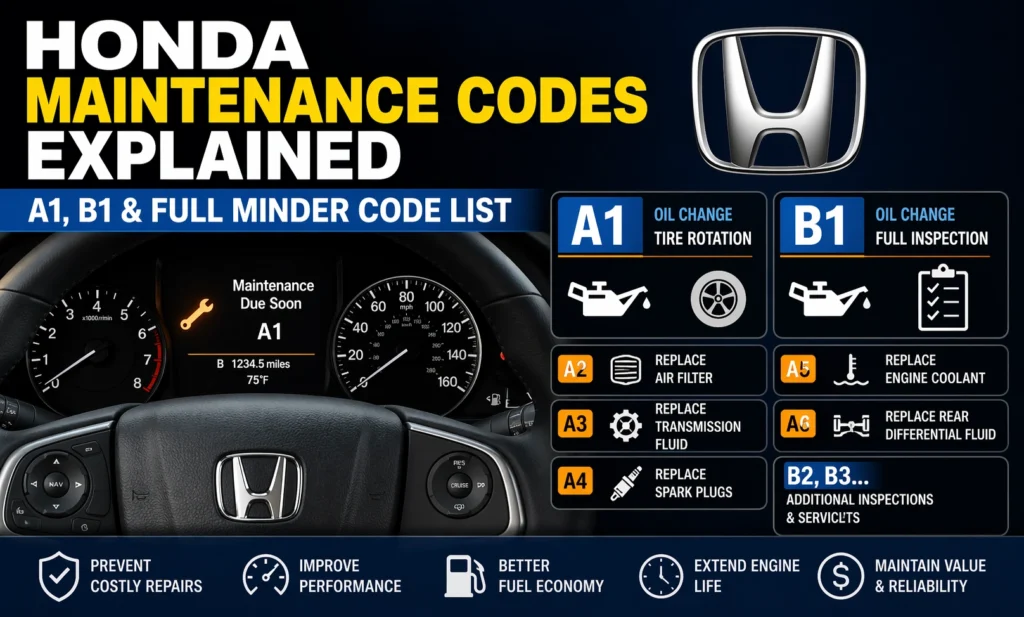
| Code | Meaning |
|---|---|
| A | Replace engine oil |
| B | Replace oil + full inspection |
| Code | Service Required |
|---|---|
| 1 | Rotate tires |
| 2 | Replace air filter |
| 3 | Replace transmission fluid |
| 4 | Replace spark plugs |
| 5 | Replace engine coolant |
| 6 | Replace rear differential fluid |
These honda service maintenance codes cover most common needs.
One of the most common codes is honda maintenance code a1.
This code means:
It is a basic but important service. Oil keeps your engine running smoothly. Tire rotation helps your tires wear evenly.
I once ignored tire rotation, and my tires wore out unevenly. It cost me more money later. So, do not skip this step.
This code usually appears every 5,000 to 7,500 miles, depending on driving habits.
Another common one is honda maintenance code b1.
This includes:
The inspection checks brakes, fluids, and other key parts.
This service is more detailed than A1. It helps catch small problems early.
If you see B1, it is a good idea to visit a mechanic soon.
If you own a Honda Accord, the system works the same way.
The honda accord maintenance codes follow the same pattern. But the timing may vary slightly based on the model year.
For example:
Accords are known for reliability. But regular maintenance keeps them running for years.
Many Accord owners report driving over 200,000 miles with proper care.
The honda civic maintenance codes are also easy to understand.
Civics are often used for daily commuting. That means frequent maintenance alerts.
Common codes include:
Since Civics are lightweight, tire rotation is very important. It improves safety and fuel efficiency.
I have seen many Civic owners save money just by following these codes.
The honda cr v maintenance codes are similar but important for SUV drivers.
CR-Vs are often used for family trips and longer drives. That means more stress on the engine and brakes.
You may see codes like:
If you drive in rough conditions, these alerts may appear sooner.
Keeping up with these codes helps your CR-V stay reliable on long journeys.
You should act as soon as you see a code.
Do not wait too long. Delaying service can lead to bigger problems.
Here is a simple guide:
| Code Type | Urgency |
|---|---|
| A codes | Soon (within 1–2 weeks) |
| B codes | Urgent (as soon as possible) |
Ignoring Honda Maintenance Codes can reduce engine life.
Yes, you can reset them after service.
Most Honda cars allow manual reset through the dashboard menu.
Steps usually include:
But only reset after completing the service. Otherwise, you may forget important maintenance.
Maintenance costs can vary. But here is a rough idea:
| Service | Estimated Cost |
|---|---|
| Oil Change | $40–$80 |
| Tire Rotation | $20–$50 |
| Full Inspection | $100–$200 |
| Transmission Fluid | $150–$300 |
Following honda maintenance minder codes can actually save money over time.
Here are some helpful tips I have learned from real drivers:
One driver shared that ignoring a simple code led to engine damage. A small fix became a big expense.
So, trust the system. It is designed to protect your car.
Many drivers make simple mistakes with maintenance codes for honda.
Avoid these:
These mistakes can reduce your car’s lifespan.
There are many benefits:
Regular maintenance also keeps your car safe.
Think of these codes as your car’s way of talking to you.
They are alerts from your car that tell you when service is needed.
It depends on driving habits, but usually every few thousand miles.
It is not recommended. Ignoring them can cause damage.
Yes, the system is similar across models like Civic, Accord, and CR-V.
No, any trusted mechanic can handle most services.
Understanding Honda Maintenance Codes is one of the easiest ways to take care of your car. These simple alerts help you stay on track with service and avoid costly repairs.
Whether you drive a Civic, Accord, or CR-V, the system works the same. It gives clear and helpful reminders based on real driving conditions.
From my experience, following these codes saves both time and money. It also gives peace of mind knowing your car is in good shape.
Read More: Thetiempo.co.uk.