 11
11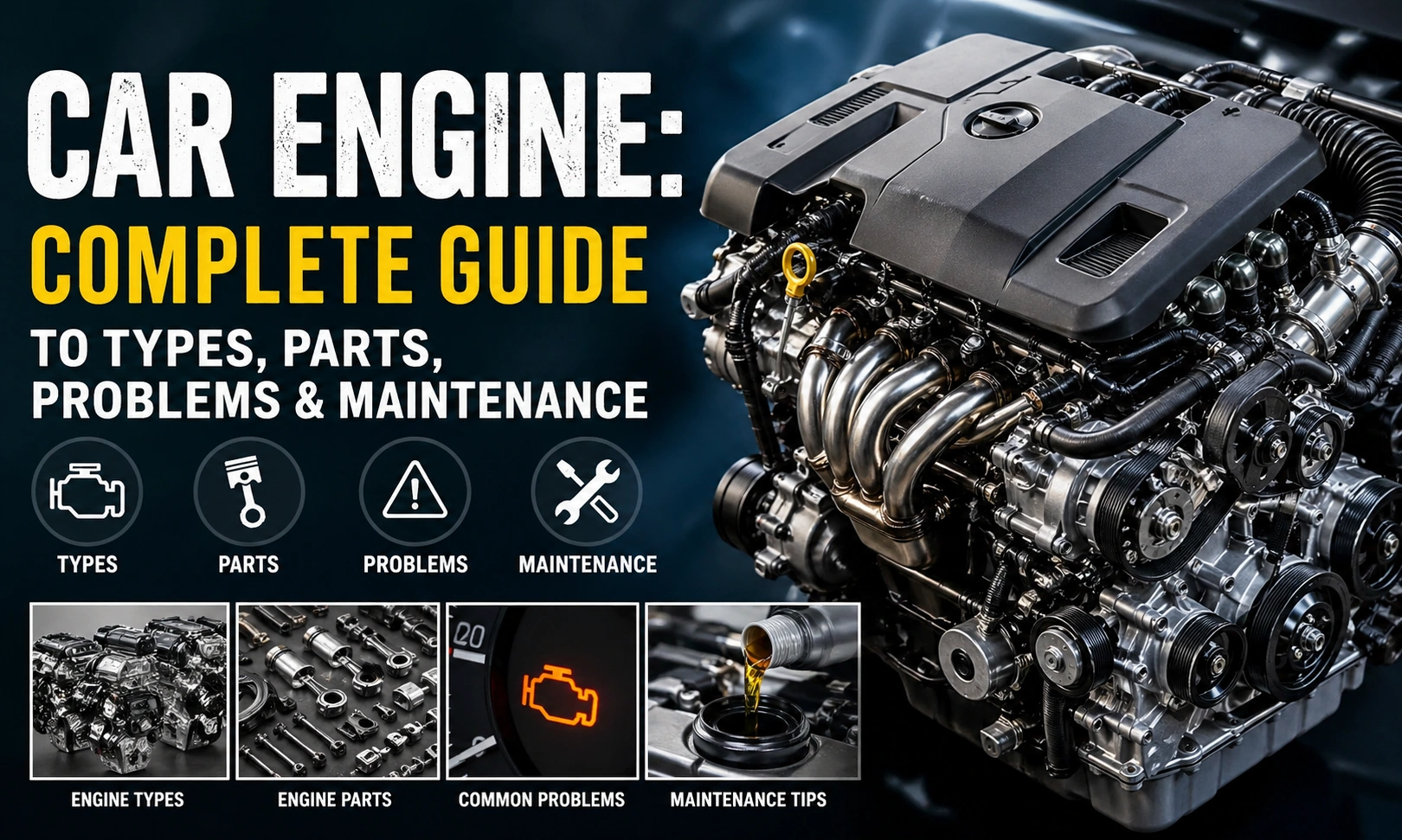
A car engine is the heart of any vehicle. It creates the power that moves your car forward. Without it, a car is only a shell with wheels. Many drivers use their cars every day but do not know what happens under the hood. Learning the basics can help you drive smarter, save money, and avoid costly repairs.
Modern engines are more advanced than ever. Some are small and fuel-efficient. Others are built for speed and power. You may hear terms like V8, V12, turbo, hybrid, or electric. These words describe how the engine works and what kind of performance it offers. No matter the type, every engine needs proper care.
I have seen many people ignore small warning signs. Later, they face expensive damage. A little knowledge can prevent that. This guide explains engine types, main parts, common problems, and easy care tips in simple words. Whether you own a family car, sports car, or diesel truck, this article will help you understand your engine better.
A car engine is a machine that changes fuel or energy into movement. In gas and diesel cars, fuel burns inside the engine. That small explosion creates force. The force turns moving parts and sends power to the wheels.
Think of it like a pump that works very fast. Air and fuel go in. Power comes out. Heat and gases leave through the exhaust system. This process happens many times every second while the engine runs.
Engines come in different sizes and shapes. Some cars use 3-cylinder engines for better fuel savings. Others use V6, V8, or even V12 setups for extra power. Sports cars often focus on speed, while family cars focus on comfort and economy.
The engine sits in the front of most cars. Some race cars and sports cars use a mid engine layout. That means the engine sits behind the seats for better balance.
Many people ask, when was the first car engine invented? Early engine ideas started in the 1800s. One important moment came in 1876 when Nikolaus Otto developed the four-stroke internal combustion engine. This design became the base for many cars.
Later, Karl Benz built one of the first practical automobiles in 1885–1886. His vehicle used a small gasoline engine. That helped start the car industry we know today.
Since then, engines have changed a lot. We moved from simple single-cylinder motors to advanced turbocharged engines, hybrids, and electric systems. Safety, fuel economy, and emissions rules pushed new ideas.
Today’s engines are cleaner, stronger, and smarter. Computers now control fuel use, timing, and performance. Even with all this change, the basic idea remains the same: turn energy into motion.
Many drivers wonder, how does a car engine work? The answer is easier than it sounds. Most gasoline cars use a four-stroke cycle:
This cycle repeats quickly in each cylinder. The pistons move up and down. That motion turns the crankshaft. The crankshaft sends power through the transmission to the wheels.
Diesel engines work in a similar way, but they use heat from compression instead of spark plugs. Electric cars use motors instead of combustion engines.
The process may sound complex, but it is just many small steps working together with perfect timing.
Knowing the parts of a car engine helps you understand repairs and maintenance. Here are the key parts:
| Engine Part | Job It Does | Why It Matters |
|---|---|---|
| Cylinder Block | Main body of engine | Holds many parts |
| Pistons | Move up and down | Create power |
| Crankshaft | Turns piston motion into rotation | Sends power out |
| Camshaft | Opens valves | Controls airflow |
| Spark Plugs | Ignite fuel | Starts combustion |
| Fuel Injectors | Spray fuel | Helps efficiency |
| Timing Belt/Chain | Keeps timing correct | Prevents damage |
| Oil Filter | Cleans engine oil | Reduces wear |
Every part must work together. If one fails, the whole engine may suffer.
There are many kinds of car engines on the road today. Each type has benefits.
Cylinders sit in a straight line. Common in small cars. Easy to build and maintain.
Cylinders form a V shape. Examples include V6, V8, V10, and V12 engine cars. They offer more power in a compact size.
Cylinders lie flat. Used in some sports cars for a lower center of gravity.
A rare design using rotors instead of pistons. Mazda made rotary engine cars famous.
Use both an engine and electric motor for better fuel economy.
No fuel burning engine. Runs on battery power only.
Your best choice depends on budget, driving style, and fuel costs.
Engine names often describe cylinder layout and count. Here is a simple guide:
| Engine Type | Common Use | Feel on Road |
|---|---|---|
| V4 Engine Cars | Rare small cars | Light and simple |
| V6 Engine Cars | Sedans, SUVs | Smooth balance |
| V8 Engine Cars | Muscle cars, trucks | Strong power |
| V10 Engine Cars | Supercars | Fast and exciting |
| V12 Engine Cars | Luxury, exotic cars | Very smooth |
| V16 Engine Cars | Rare classics | Extreme size |
More cylinders do not always mean better. A modern turbo 4-cylinder can beat older large engines in fuel use and even speed.
Car engine oil is like blood for the engine. It lubricates moving parts, reduces heat, and helps prevent wear. Without oil, metal parts rub together and fail quickly.
Always use the oil grade recommended in your owner’s manual. Gas and diesel engines may need different oils. That is why people ask about car oil for diesel engine or oil type choices.
Oil also carries dirt to the filter. Over time, it breaks down and gets dirty. Old oil cannot protect well.
Signs you need an oil change:
Regular oil changes are one of the cheapest ways to protect your engine.
Many drivers ask when to change oil. It depends on the car, oil type, and driving habits.
| Driving Condition | Suggested Oil Change |
|---|---|
| Normal driving | Every 5,000–7,500 miles |
| Heavy traffic | Every 3,000–5,000 miles |
| Towing or heat | More often |
| Full synthetic oil | May last longer |
| Older engines | Check more often |
If you are unsure, follow your owner’s manual. I always tell drivers to check oil monthly. It takes two minutes and can save thousands.
You can do it yourself or search for car engine oil change near me for local service shops.
Even good engines can fail. Common car engine problems include:
A common issue is engine misfire car symptoms. The engine may shake, hesitate, or lose power. Causes include bad spark plugs, coils, fuel issues, or sensors.
Another issue is overheating. Low coolant, a bad thermostat, or radiator trouble can cause it.
Never ignore warning signs. Small issues become expensive fast.
The car check engine light can worry any driver. Sometimes it is minor. Sometimes it is serious.
If the light stays solid:
If the check engine light flashing and car shaking happens, stop driving soon. A flashing light often means a severe misfire that can damage the catalytic converter.
If the check engine light on but car runs fine, the issue may still need attention. Scan codes with an OBD tool or visit a mechanic.
The warning light is not something to fear. It is an early alert system.
When damage happens, owners ask whether to repair or replace.
A car engine repair may cost much less than a full replacement. But sometimes replacing saves money long term.
Always get two estimates. Search for trusted car engine replacement near me if needed.
Simple habits make engines last longer.
I have seen engines cross 200,000 miles with basic care. I have also seen engines fail early due to neglect.
A clean car engine air filter helps airflow and fuel economy. Fresh coolant protects from heat and freezing. Small steps matter.
A f1 racing car engine is built for extreme speed. Formula 1 cars now use advanced hybrid turbo V6 power units. They create huge power from small size.
Race engines are different from street engines. They focus on speed, lightweight parts, and quick response. They need frequent service and cost a lot.
Mid-engine race cars place the engine behind the driver. This improves balance in corners. That is why many GT3 and supercars use mid-mounted engine cars layouts.
Street cars must last years. Race engines must win races. Their goals are very different.
The future is changing fast. Electric vehicles are growing. Hybrid systems are common. Gasoline engines are becoming smaller but smarter.
New engines use turbochargers, direct injection, and better materials. Computer control keeps them efficient. Some brands are testing synthetic fuels and hydrogen engines.
Traditional engines may stay for years in many markets. Trucks, sports cars, and long-distance vehicles still rely on combustion power.
The future may include many choices instead of one winner.
Check your owner’s manual, VIN decoder, or sticker under the hood. A dealer can also tell you.
Usually a serious misfire. Stop driving and inspect it soon.
Use the type listed in your owner’s manual. Coolants are not always the same.
Yes, but cover sensitive electronics and use safe degreaser products.
Many last 150,000 to 250,000 miles with good care.
Not always. V8 offers more power, but V6 may save fuel and cost less.
Your car engine is one of the most important parts of your vehicle. It powers every trip, from short errands to long road journeys. Understanding how it works helps you make smarter choices, spot problems early, and reduce repair costs.
You do not need to be a mechanic to care for your engine. Change the oil, watch warning lights, check fluids, and follow regular service schedules. These simple habits can add years of life to your car.
Whether you love V8 muscle cars, efficient hybrids, or advanced F1 technology, the engine remains a fascinating machine. If you found this guide helpful, share it with other drivers or save it for future reference.