 11
11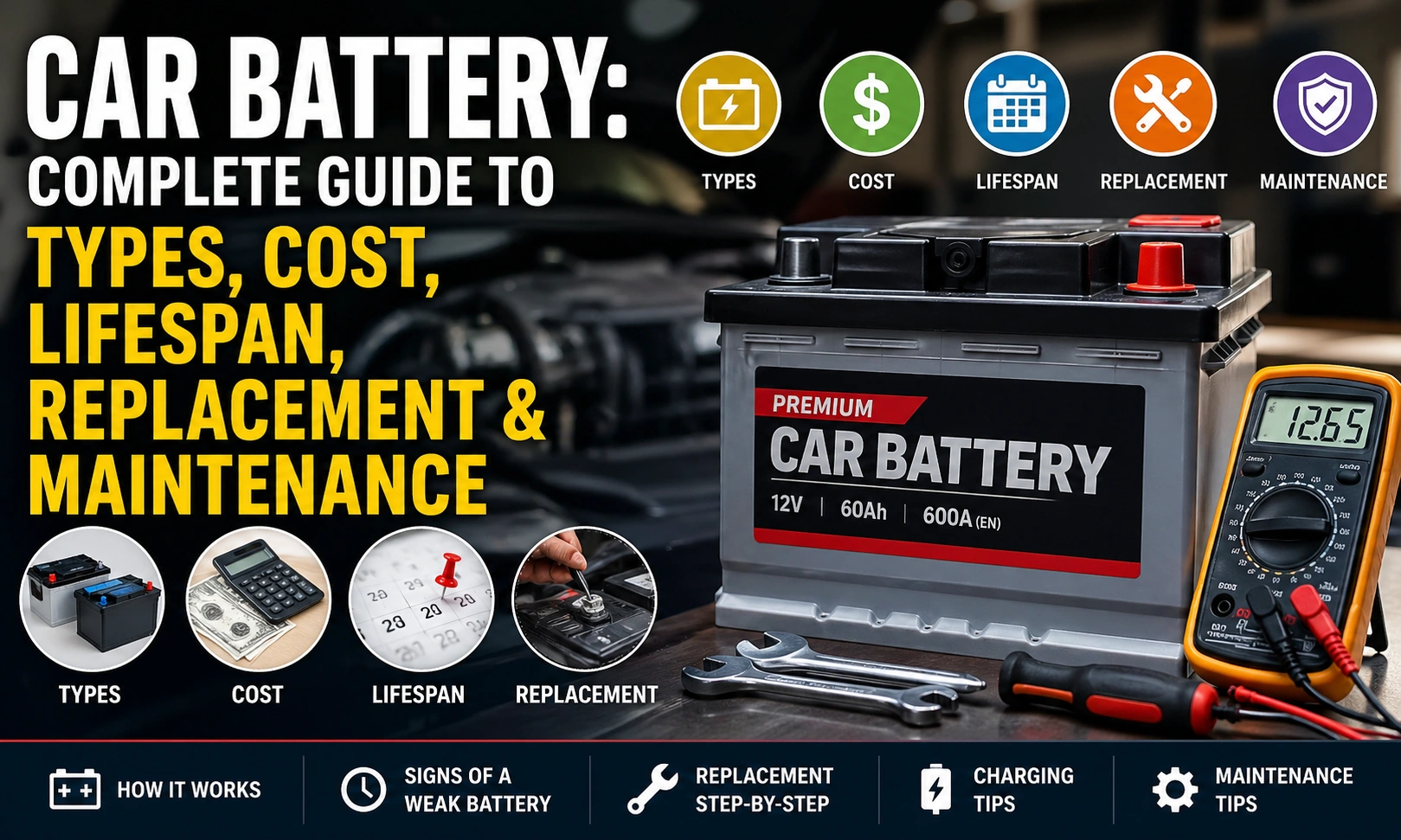
A car battery is one of the most important parts of any vehicle. It may look simple, but it does a big job every day. It powers the starter motor, helps run lights, and supports the electronics inside your car. Without a healthy battery, your car may not start at all.
Many drivers only think about the battery when there is a problem. That often happens on a busy morning or late at night. A weak battery can leave you stranded with no warning. The good news is that most battery problems are easy to prevent with simple care and early testing.
This guide explains everything in easy words. You will learn how a battery works, how long it lasts, how much it costs, signs of failure, and how to replace one safely. I’ll also share simple tips that many drivers ignore. If you want to save money and avoid stress, this article will help.
A car battery stores electrical energy and sends power when your vehicle needs it. Its biggest job is starting the engine. When you turn the key or press the start button, the battery gives power to the starter motor. That motor turns the engine so it can begin running.
The battery also powers lights, dashboard screens, locks, alarms, and radio systems. In newer cars, it helps many sensors and computers work properly. Even when the engine is off, some systems still use small amounts of battery power.
I once helped a friend whose car would not start outside a store. The issue was not the engine. It was only an old battery that had lost charge. A quick battery replacement solved everything. That shows how one small part can stop a whole vehicle.
If your battery is strong, your car feels reliable. If it is weak, every trip becomes uncertain.
Most car batteries use lead plates and acid to create electricity. This type is called a flooded lead acid battery. Inside the battery case, a chemical reaction happens between the plates and liquid. That reaction creates power.
When you start the car, stored power moves to the starter motor. After the engine starts, the alternator takes over. The alternator runs electrical systems and recharges the battery while you drive.
Think of it like this: the battery starts the day, and the alternator keeps the day going. Both parts must work together. If the alternator fails, the battery may drain fast. If the battery fails, the engine may not start.
Modern vehicles may also use AGM batteries. These are stronger, handle vibration better, and support vehicles with start-stop systems. They often cost more, but they can offer better performance.
Understanding this simple system helps you diagnose problems faster and avoid unnecessary repairs.
Not all batteries are the same. Choosing the right type matters for performance and lifespan. Here are the most common options.
| Battery Type | Best For | Main Benefit | Cost Level |
|---|---|---|---|
| Flooded Lead Acid | Standard cars | Affordable and common | Low |
| AGM Battery | Newer cars, start-stop systems | Stronger and longer lasting | Medium-High |
| Lithium Car Battery | Performance vehicles | Very light and fast charging | High |
| Gel Battery | Specialty use | Leak resistant | Medium |
Flooded batteries are common in many daily vehicles. They work well and cost less. AGM batteries are popular in newer models because they handle more electronics. Lithium batteries are lighter and often used in racing or custom builds.
Always check your owner’s manual before buying. Using the wrong battery can cause poor performance or warning lights.
If you are unsure, a trusted car battery store or mechanic can help match the correct battery by vehicle.
Many people ask, how long do car batteries last? The short answer is usually three to five years. But real life depends on driving habits, weather, and maintenance.
Hot weather can shorten battery life because heat speeds up chemical wear. Very cold weather can also cause trouble because batteries lose strength in low temperatures. Short trips are another issue. If you only drive a few minutes at a time, the battery may not fully recharge.
Here is a quick guide:
| Driving Condition | Average Lifespan |
|---|---|
| Mild weather + regular driving | 4–5 years |
| Hot climate | 2–4 years |
| Cold climate | 3–5 years |
| Short trips only | 2–3 years |
I suggest testing your battery once it reaches three years old. Many shops offer a car battery check for free. Replacing it early can prevent roadside stress later.
A weak battery often gives warning signs before it dies. Learning these signs can save time and money.
The most common sign is slow engine cranking. If the engine sounds weak when starting, the battery may be low. Dim headlights are another clue. Lights may look weak when the engine is off.
You may also notice dashboard warnings like the battery light on in car. This does not always mean the battery is bad. It can also mean the charging system has a problem.
Other signs include:
I always tell drivers not to ignore early signs. A battery rarely gets better on its own. Testing it early gives you more control and fewer surprises.
A healthy standard battery should read about 12.6 volts when the engine is off. That is why many people call it a 12 volt car battery or 12v car battery.
When the engine is running, voltage usually rises to around 13.7 to 14.7 volts because the alternator is charging it. If the reading is too low, charging may be weak. If too high, the system may overcharge.
Use this chart as a guide:
| Voltage Reading | Battery Condition |
|---|---|
| 12.6V or more | Fully charged |
| 12.4V | Good |
| 12.2V | Partly charged |
| 12.0V | Weak |
| Below 12.0V | Needs charging or replacement |
Knowing car battery voltage helps you spot trouble early. A simple multimeter can give useful answers in minutes.
Testing is easy and can prevent breakdowns. The best tool is a multimeter. Many people search test car battery with a multimeter, and the process is simple.
First, turn the car off. Set the meter to DC volts. Touch the red probe to the positive terminal and black probe to the negative terminal. Read the number on screen.
If it shows 12.6 volts, the battery is strong. If it is near 12.0 volts, charge it soon. If it drops much lower, it may be failing.
You can also test while starting the car. If voltage drops sharply during cranking, the battery may be weak.
Many auto shops also use a load tester. This checks how the battery performs under stress. It gives a better picture than voltage alone.
Testing once every few months is a smart habit, especially before winter or long trips.
Many drivers can replace a battery at home. If you know how to change car battery, you can save labor costs.
Follow these steps:
Some batteries are heavy, so use care. You may need tools to remove battery from car like a wrench or socket set.
After installation, start the car and check for warning lights. Some vehicles may need radio codes or system resets, so check your manual first.
Many people ask about car battery replacement cost before buying. Prices vary by battery type, brand, and vehicle size.
| Battery Option | Average Price |
|---|---|
| Economy Battery | $80–$130 |
| Mid-Range Battery | $130–$220 |
| AGM Battery | $180–$350 |
| Premium Installed Service | $150–$400+ |
Labor may be free at some stores if you buy the battery there. Some shops charge extra for installation. Luxury or hard-to-reach batteries cost more.
If you search how much is a car battery, remember that the cheapest option is not always best. A better battery may last longer and save money over time.
I usually suggest choosing based on warranty and fit, not price alone.
The best car battery depends on your vehicle and climate. Still, some brands are known for strong quality and warranties.
Popular choices include:
Some drivers buy from walmart car battery sections because prices can be competitive. Others prefer local shops for testing and quick support.
When comparing brands, check:
A trusted brand with the right fit is better than a random cheap battery that fails early.
If the battery is weak but not dead, charging may help. Use a car battery charger or trickle charger for car battery.
A standard charger works faster. A trickle charger is slower and safer for storage or long periods without driving. It is great for seasonal cars.
Basic steps:
Portable tools are also popular. A portable car battery charger can help in emergencies.
Never charge a frozen or damaged battery. If the case is cracked or swollen, replace it instead.
A dead car battery does not always mean replacement. Sometimes it only needs a jump start.
To jumpstart a car with a battery from another vehicle:
A car battery jump starter is even easier because you do not need another car.
After the jump, drive for at least 20 minutes. Then test the battery. If it dies again soon, replacement may be needed.
Battery care is simple. Small habits can add months or years of life.
Keep terminals clean and tight. Corrosion blocks power flow. Turn off lights when leaving the car. Avoid long periods without driving. Use a maintainer if the car sits often.
Try to take longer drives sometimes. Short trips may not recharge the battery fully. Secure the battery well because vibration can damage it.
Also, test the battery before extreme seasons. Heat and cold reveal weak batteries quickly.
My personal rule is simple: inspect twice a year, test once a year, replace before failure. That plan has saved me more than once.
A little attention today can prevent a major problem tomorrow.
You have many buying options today. You can shop online, visit local stores, or use mobile installation services.
Common places include:
Many people search car battery near me or car batteries near me when they need fast help. If you need urgent service, local stores are often best because they may install it the same day.
Compare warranty, price, and freshness date. A battery sitting on a shelf too long may lose value. Ask staff to check the production date if possible.
Good support matters as much as price.
Most last three to five years. Heat, cold, and short trips can shorten life.
Many cost between $80 and $250. AGM models can cost more.
Yes, many drivers can. Use the correct tools and follow safety steps.
Old age, bad alternator, lights left on, corrosion, and short trips are common causes.
Choose AGM if your car needs it or has many electronics. Regular batteries work well for many older cars.
Sometimes yes. If damaged or very old, replacement is often the better choice.
A healthy car battery keeps your vehicle ready every day. It starts the engine, powers electronics, and supports safe driving. When you understand battery life, voltage, warning signs, and replacement steps, you make smarter choices.
Do not wait until your car refuses to start. Test the battery, clean terminals, and replace it before failure. That small effort can save time, money, and stress.
If your battery is showing signs of age, now is a great time to check it. A few minutes today can prevent a big problem later.