 11
11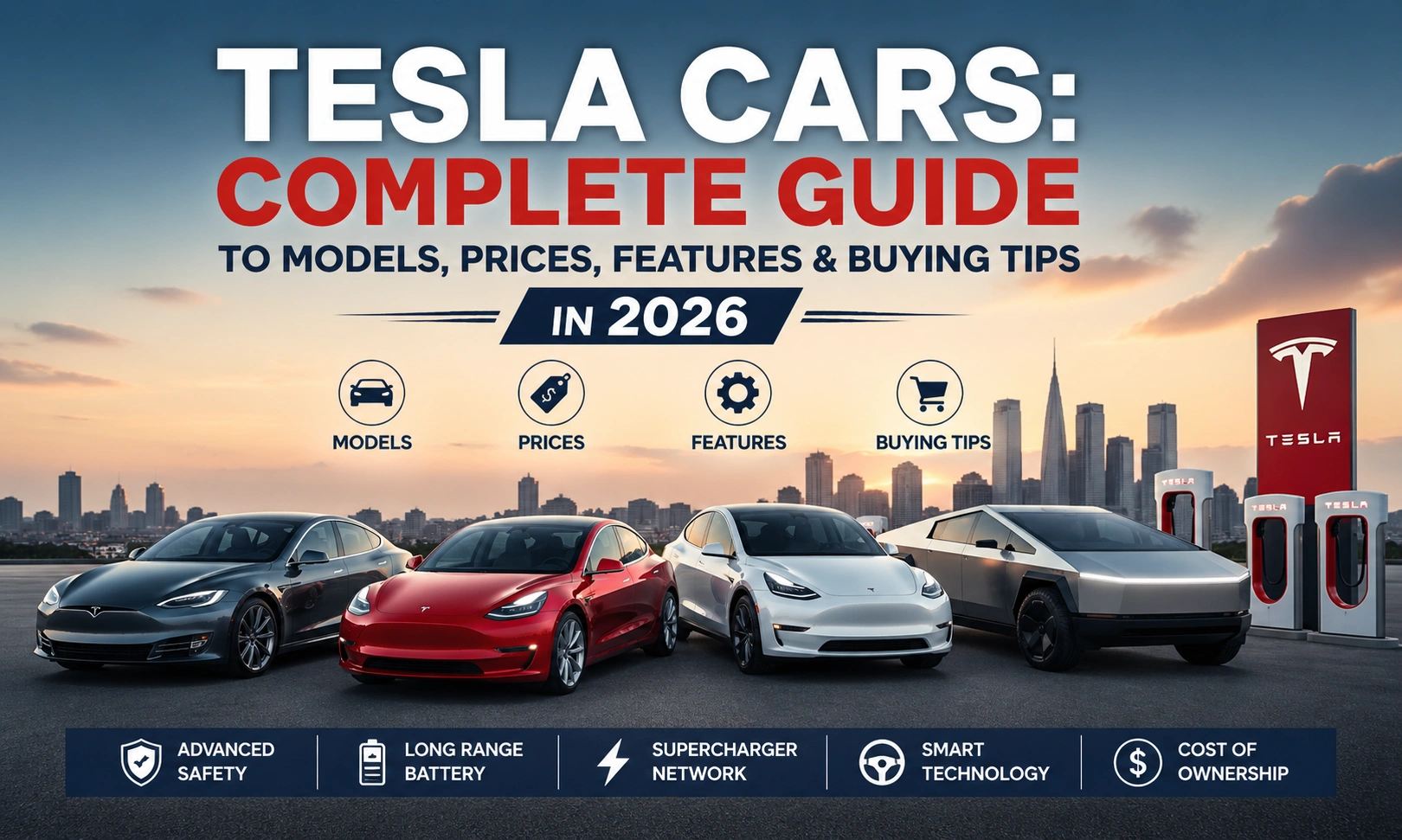
Tesla cars changed the auto world. Years ago, many people thought electric vehicles were slow, boring, and hard to charge. Tesla helped change that idea. Today, Tesla is one of the most talked-about car brands on earth. People know it for fast acceleration, clean design, big touchscreens, and smart software updates.
I have watched many buyers move from gas cars to EVs. One common reason is simple: they want lower fuel costs and a modern driving feel. Many also enjoy home charging. Waking up to a “full tank” each morning feels convenient.
Still, Tesla is not perfect for everyone. Prices can change. Insurance can cost more in some places. Repairs may take time in some regions. That is why this guide matters. You will learn about models, pricing, self-driving features, charging, ownership costs, used buying tips, and more. If you are comparing EVs or planning your first purchase, this guide will help you make a smart choice.
The biggest reason Tesla cars became popular is that they made EVs exciting. Earlier electric cars focused only on saving energy. Tesla added speed, style, and technology. That made people pay attention.
Another reason is charging. Tesla built a large fast-charging network called Superchargers. This made long trips easier than many early EV rivals. The company also improved software through over-the-air updates. Some features can improve without visiting a dealer.
Many owners also like the simple cabin design. Most controls sit on one large screen. Some people love this clean look. Others prefer more physical buttons. It depends on taste.
Tesla also built strong brand awareness. Even people who know little about EVs often know the Model 3 or Model Y. That kind of recognition matters. It helps resale value and creates trust for new buyers.
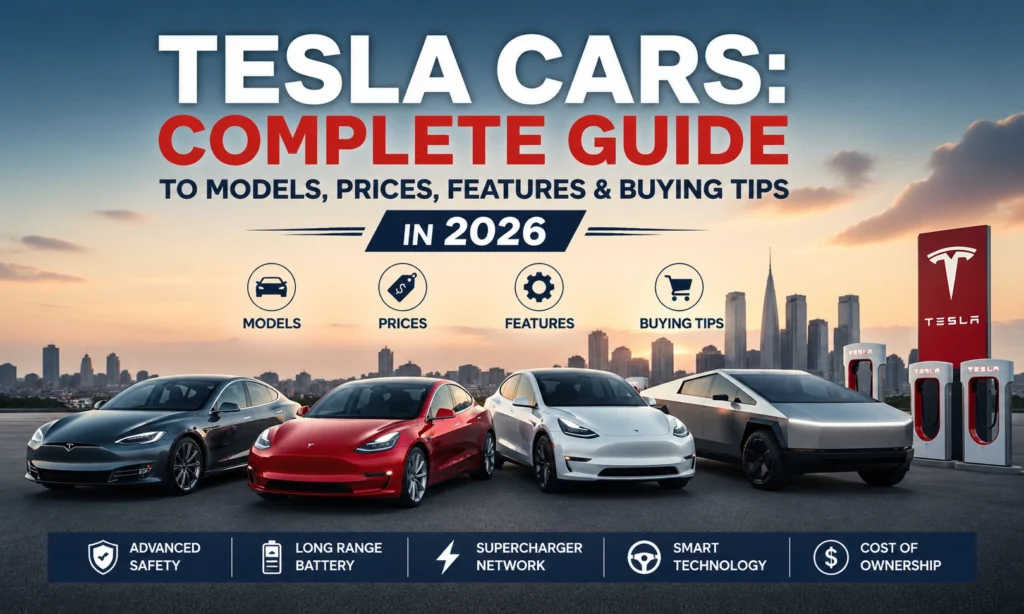
Tesla’s active lineup now focuses on a few main vehicles. Availability can vary by country, but these are the most recognized models in 2026.
| Model | Type | Best For | Notes |
|---|---|---|---|
| Model 3 | Sedan | Daily driving | Popular and efficient |
| Model Y | SUV/Crossover | Families | Spacious and practical |
| Cybertruck | Pickup | Utility and style | Bold design |
| Roadster | Sports Car | Performance fans | Still delayed |
| Semi | Commercial Truck | Business fleets | Not consumer-focused |
The average buyer usually compares the Model 3 and Model Y first. They are the most practical choices for everyday use.
The Model 3 is often the easiest way to enter the Tesla world. It is a sedan with good range, strong performance, and a lower price than bigger models.
For commuters, the Model 3 makes sense. It is easier to park than an SUV and often more efficient. That means lower energy use per mile. It also feels quick, even in base trims.
Many first-time EV buyers choose it because it balances cost and features. You get access to Tesla software, charging support, and modern cabin tech without paying flagship prices.
If I were buying mainly for city use and highway commuting, I would put the Model 3 high on the list. It offers a lot of value. Buyers who need extra cargo room or rear-seat space may prefer the Model Y instead.
The Model Y is one of the brand’s most important vehicles. It shares much with the Model 3 but adds SUV shape, more cargo room, and easier entry height.
Families often prefer SUVs because they are flexible. Grocery bags, strollers, luggage, and sports gear fit more easily. The hatchback design helps too.
Many households choose the Model Y as their only car. It works for school runs, road trips, and daily errands. That broad usefulness is why it sells so well in many markets.
Tesla has refreshed the Model Y in recent years with updates to comfort and styling. New versions and special trims may vary by region.
If you want one vehicle that can do almost everything, the Model Y is often the smartest Tesla choice.
Prices change often due to region, taxes, and promotions. Use these as rough examples, not final quotes.
| Model | Estimated Starting Price (USD) | Price Level |
|---|---|---|
| Model 3 | $38,990+ | Entry |
| Model Y | $44,990+ | Mid |
| Cybertruck | $72,000+ | Premium |
| Roadster | Expected High Price | Luxury |
When people ask how much is a Tesla car, the answer depends on more than sticker price. You must also consider taxes, insurance, charging setup, and finance costs.
Some buyers wait for price drops or inventory deals. Tesla pricing has changed quickly before, so compare carefully before ordering.
Many shoppers forget to check insurance first. That can be a mistake. In some markets, tesla car insurance costs more than similar gas cars.
Why? Repair costs can be higher. Sensors, cameras, batteries, and body parts may cost more. Some insurers also price based on performance and theft risk.
Before buying, get quotes from at least three providers. Use the exact model and trim you want. Compare deductibles and coverage limits too.
If rates seem high, try these steps:
A cheap purchase price can become expensive with high insurance, so always run the numbers first.
Many people search for tesla self driving car features. Tesla offers driver-assistance systems, but full autonomy depends on laws, software progress, and hardware.
Today, most systems still require driver attention. Hands-free or unsupervised driving rules vary by place. Marketing names can confuse buyers, so read details before paying extra.
Helpful features may include:
| Feature | What It Does |
|---|---|
| Adaptive Cruise | Keeps speed and distance |
| Lane Centering | Helps stay in lane |
| Auto Park | Assists parking |
| Navigation Assist | Helps on supported roads |
Recent reports show Tesla continues investing heavily in autonomy and robotaxi plans, but timelines can shift.
My advice: buy the car for what it can do now, not for future promises.
Many buyers ask where are Tesla cars made or where is Tesla car manufactured. The answer depends on model and market.
Tesla builds vehicles in multiple factories around the world. Common production hubs include:
Your delivery vehicle may come from the nearest factory serving your region. This can affect price, delivery time, and import taxes.
For example, tariffs can change pricing in some countries. Buyers sometimes notice one model costs more simply because it comes from a different factory.
If local origin matters to you, ask before ordering. The source plant may vary during the year.
Charging is easier than many first-time buyers expect. Most owners do the majority of charging at home.
Home charging is simple: park, plug in, wake up charged. If you drive normal daily miles, this can cover most needs. A faster home charger reduces wait times.
For travel, public fast chargers help. Tesla’s Supercharger network is a major advantage in many regions. Route planning in the car can guide stops.
| Charging Type | Best Use | Cost Level |
|---|---|---|
| Home Outlet | Slow top-ups | Low |
| Home Wall Charger | Daily charging | Medium setup |
| Fast Charger | Trips | Higher per session |
If you can charge at home, EV ownership becomes much easier.
Used EV shopping can save money, and tesla used cars are popular. But check condition carefully.
Start with battery health, mileage, accident history, and tire wear. Also test charging speed and software functions. A clean-looking car can still hide expensive issues.
Used Tesla benefits:
Used Tesla risks:
I often tell budget buyers to compare a used higher trim against a new base trim. Sometimes the used option gives better value.
The sticker price is only one part of ownership. Smart buyers look at total cost.
Here are common hidden costs:
| Cost Area | What to Know |
|---|---|
| Insurance | Can be higher |
| Tires | Performance tires wear faster |
| Home Charger | Installation may cost extra |
| Registration | EV fees vary |
| Repairs | Parts can be expensive |
Electricity usually costs less than gas, but not always. Public fast charging can cost more than home charging. If you rely only on public charging, savings may shrink.
Think long term. A more expensive car with low running costs can still be a good deal.
Tesla cars are great for many people, but not all buyers.
Best match for:
Maybe not ideal for:
The best car is not always the most famous one. It is the one that fits your life.
Tesla has strong rivals now. That is good for buyers. More competition means better prices and better features.
Other EV brands may offer:
Tesla often wins in software feel, charging ecosystem, and performance. But always test-drive rivals too. The EV market is bigger now than ever befor
Before you place an order, slow down and compare carefully.
A car is a big purchase. One hour of research can save thousands later.
Entry models often start around the high-$30,000 range in the U.S., but taxes and options change the final price.
The Model Y is often the best family pick because it offers more cargo space and easier access.
Sometimes yes. It depends on your country, age, driving record, and model.
Yes, if you inspect battery health, service history, and accident records first.
Tesla builds cars in the U.S., China, and Germany, depending on model and market.
Driver-assistance features exist today, but full autonomy depends on software and local rules.
Tesla cars helped move electric vehicles into the mainstream. They offer speed, smart features, and lower day-to-day energy costs for many owners. The best model depends on your needs. The Model 3 suits many commuters. The Model Y fits families well. Used options can bring strong value.
Still, never buy only because of hype. Check insurance, charging access, and total ownership cost first. If you do that, you will make a smarter choice and enjoy your EV journey with confidence.