 11
11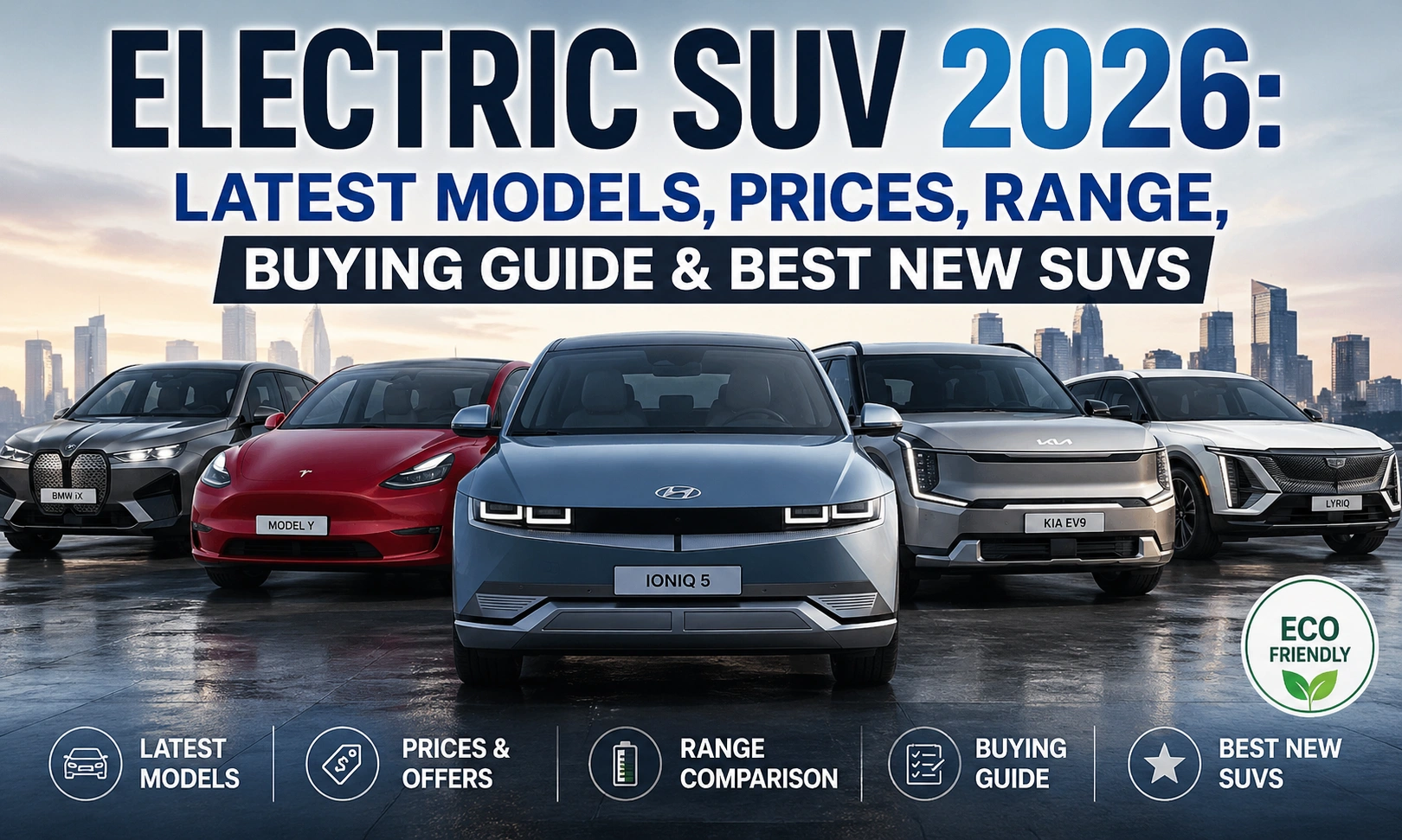
The electric SUV market in 2026 is bigger, smarter, and more exciting than ever. A few years ago, buyers had limited choices. Now there are compact city crossovers, premium luxury models, fast performance SUVs, and large family vehicles with three rows. This means almost every driver can now find an electric option that fits their life.
The biggest change in 2026 is not only more models. It is better technology. New batteries charge faster. Many vehicles now travel farther on one charge. Cabin technology has improved too, with larger screens, better apps, and smarter safety tools. Prices are also becoming more competitive as more brands enter the market.
I have watched the EV space grow quickly, and 2026 feels like a turning point. Buyers no longer need to choose between practicality and clean driving. They can now get both. In this guide, you will learn about the newest launches, best models, prices, charging, family picks, luxury choices, and smart buying tips for 2026.
The year 2026 stands out because many brands are launching fresh EV models or major upgrades. Reports show dozens of new EVs are arriving globally, including several SUVs across different price levels. That gives buyers more power, more variety, and better value than before.
Another major shift is that traditional car brands are now taking EVs seriously. Companies like Volvo, Porsche, Cadillac, Toyota, Hyundai, Kia, Honda, and BMW are expanding their electric SUV lineups. This creates stronger competition with early EV leaders.
Charging networks are improving too. Faster chargers and better route-planning systems make long trips easier. More people now feel comfortable owning an EV as their main family car.
In simple words, 2026 is not just another year. It is a year where the electric SUV becomes a normal mainstream choice for everyday drivers.
An electric SUV is a sport utility vehicle powered by electricity instead of gasoline or diesel. It uses a battery pack and electric motor to move the car. You charge it by plugging it into a charger at home or at public stations.
SUVs are popular because they offer higher seating, useful cargo room, and family-friendly cabins. Electric power adds new benefits like quiet driving, instant acceleration, and lower running costs.
Most electric SUVs also come with modern technology. You often get touchscreens, phone apps, driver assistance features, and software updates. Some can even pre-cool or pre-heat the cabin before you enter.
For many people, an electric SUV feels easier to live with than expected. Charge at night, drive in the day, and skip fuel stations often. That simple routine is why more buyers are making the switch.
There are many strong choices this year. The best model depends on your needs, budget, and lifestyle.
| Model | Best For | Key Highlight |
|---|---|---|
| Tesla Model Y | Daily use | Strong range & charging |
| Kia EV9 | Families | 3-row seating |
| Cadillac Lyriq | Luxury buyers | Premium cabin |
| Ford Mustang Mach-E | Sporty feel | Sharp handling |
| Hyundai Ioniq 5 | Value buyers | Fast charging |
| BMW iX | Premium performance | Powerful drive |
| Volvo EX60 | Midsize buyers | Strong new demand |
The best electric SUV for one person may not be the best for another. A city buyer may prefer compact size. A family may need three rows. A luxury buyer may care most about comfort and brand feel.
Always compare real-life needs first, not only internet hype.
Many exciting launches are making headlines in 2026. One of the biggest is the new Volvo EX60. Volvo says demand has exceeded expectations, showing that buyers still strongly want midsize electric SUVs.
Porsche is also expanding its EV SUV range with the 2026 Cayenne Coupe Electric. It brings strong performance, quick charging, and premium styling.
Cadillac continues growing with the Escalade IQ and larger Escalade IQL, offering long claimed range and huge interior space.
In Asia, BYD revealed a new-generation Atto 3 with longer range and faster charging claims. That shows how quickly brands are improving EV technology.
The message is clear: 2026 buyers have more exciting choices than ever before.
Families need space, comfort, and safety. Thankfully, 2026 offers great options. The Kia EV9 remains one of the top choices because it offers three rows, modern styling, and flexible seating. It is ideal for school runs, road trips, and weekend shopping.
The Volvo EX90 is another strong family pick. Volvo has long been trusted for safety, and its electric models continue that focus. It suits buyers who want premium quality with practical space.
Large buyers may also like the Cadillac Escalade IQ or IQL. These are bigger and more expensive, but they offer strong range and huge cabins.
| Family Need | Good Choice |
|---|---|
| 3 Kids + Cargo | Kia EV9 |
| Premium Safety | Volvo EX90 |
| Large Luxury Family | Escalade IQ |
| Daily Family Value | Hyundai Ioniq 5 |
If you need a 7 seater electric SUV, 2026 gives better choices than any year before.
Luxury buyers now have many premium EV options. The old idea that EVs must feel basic is gone. Today’s high-end models feel advanced and comfortable.
The Cadillac Lyriq offers elegant design and a rich cabin. BMW’s electric SUV lineup focuses on performance and technology. Mercedes electric SUV models bring smooth ride quality and upscale interiors. Porsche adds sports-car energy to SUV practicality.
Genesis also deserves attention. It often gives premium materials and features at a better value than some older luxury brands.
The luxury electric SUV market is growing because buyers want both status and sustainability. Quiet electric driving also suits luxury cars very well. The calm cabin feels refined and relaxing.
If comfort, materials, sound systems, and prestige matter to you, 2026 is a great time to shop premium EVs.
Not every buyer wants to spend luxury money. The good news is that lower-cost EV choices are growing.
Models like the Hyundai Kona Electric, Chevrolet Equinox EV, Volvo EX30, and smaller Kia options aim to bring EV ownership to more people. These vehicles may have less space than large SUVs, but they still offer useful practicality.
A smart tip is to compare total cost, not only purchase price. Electricity can cost less than fuel. Maintenance may also be lower. Over time, a slightly higher purchase price can still save money.
Used vehicles can help too. A used electric SUV may offer great value if the battery is healthy and the price is fair.
Budget buyers finally have real options in 2026. That is one reason EV adoption keeps growing.
Range is one of the first things buyers ask about. It means how far the SUV can drive on a full charge. Many 2026 models now offer much better range than early EVs.
Still, real-world range depends on speed, weather, road type, and driving style. Fast highway driving usually uses more energy. Cold weather can reduce battery performance too.
Charging is also improving fast.
| Charger Type | Best Use | Speed |
|---|---|---|
| Home Outlet | Backup charging | Slow |
| Home Wall Charger | Daily charging | Medium |
| DC Fast Charger | Road trips | Fast |
Some new models now support ultra-fast charging. For example, Porsche’s latest EV SUV tech supports rapid charging under the right conditions.
When buying any electric SUV, look at both range and charging speed together.
Interest in EVs is rising in Pakistan and nearby markets. Buyers are watching global launches closely, especially brands like BYD, Hyundai, Kia, Toyota, and Honda.
Charging infrastructure is still growing, so buyers should check local charging access before buying. Home charging can be the easiest option for many households.
Price remains a key factor in South Asia. That is why value-focused models often attract attention first. BYD’s growing presence and interest in practical EV models show that the region is ready for change.
In developing markets, buyers often think carefully about resale value, service support, and battery trust. These are smart concerns. Always check dealer presence and spare parts support.
The EV future may grow slower in some regions than others, but momentum is clearly building.
A new vehicle gives you the latest battery, full warranty, fresh condition, and newest features. If your budget allows it, buying new is often the simplest path.
A used EV can save serious money. Early owners often take the biggest value drop. That creates opportunity for second buyers. A used electric SUV can be a smart deal.
But used shopping needs extra care. Ask for battery health data if possible. Review service history. Test charging speed. Confirm software and warranty status.
If you plan to keep the vehicle many years, new may feel safer. If you want value and lower upfront cost, used may win.
There is no universal answer. It depends on your budget, risk comfort, and ownership plans.
Before spending money, make a simple checklist.
First, think about your daily distance. If you drive short city routes, you may not need maximum range. If you travel often, range matters more.
Second, check charging access. Can you charge at home? Are public chargers nearby? This can shape your ownership experience more than horsepower numbers.
Third, test comfort. Sit in the front and back seats. Check cargo room. Try the infotainment system. A car can look great online but feel wrong in person.
Fourth, compare warranty and service support. A great product is even better when help is nearby.
Finally, review resale value and ownership costs. Smart buying is about long-term fit, not only first excitement.
If you asked me a few years ago, I would say some buyers should wait. Today, many no longer need to wait. The market is stronger, choices are wider, and technology is better.
That does not mean every EV is perfect. Some areas still need better charging networks. Some buyers still need towing or long rural travel support. But for many city and suburban drivers, EV ownership now makes real sense.
What impresses me most is how normal the experience has become. Charge overnight, drive quietly, save fuel money, and enjoy modern tech. That routine feels easy once you start.
For many households, a 2026 electric SUV is no longer the future. It is a smart present-day option.
It depends on your needs. Tesla Model Y, Kia EV9, Cadillac Lyriq, and Volvo EX60 are strong choices.
Yes. Many offer better range, faster charging, and improved software.
Kia EV9 and Volvo EX90 are top family picks.
Yes, if battery health and service history are checked carefully.
Yes. Many owners use home charging overnight.
Often they cost less to maintain than fuel SUVs because they have fewer moving engine parts.
The electric SUV market in 2026 is stronger than ever. Buyers now have real choices across every budget, size, and style. You can buy a compact city EV, a luxury cruiser, or a large three-row family SUV.
The best decision depends on your budget, charging access, and daily driving needs. Focus on real usefulness, not only marketing buzz. Compare range, comfort, warranty, and support.