 11
11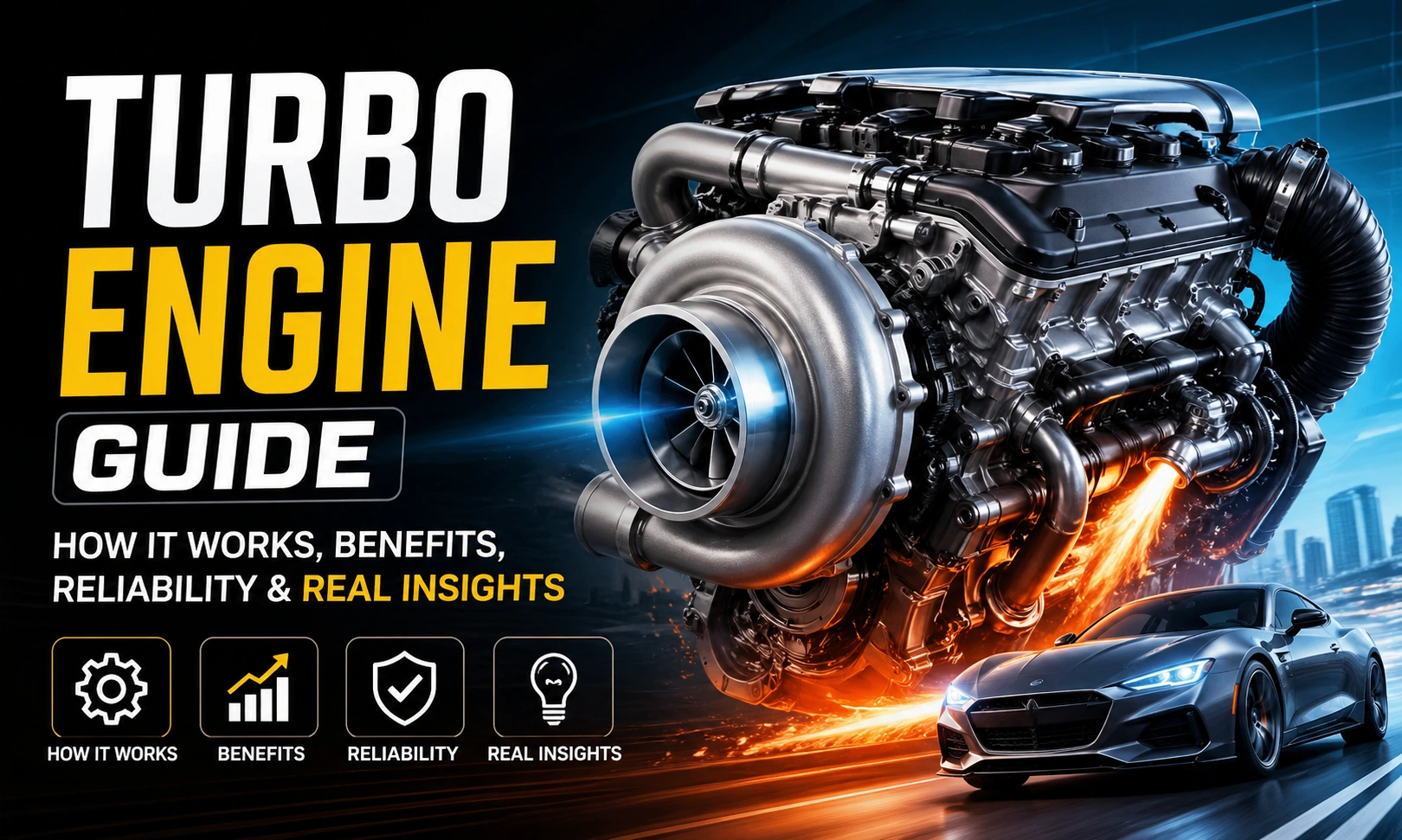
A turbo engine is one of the most exciting upgrades in modern cars. It gives more power without needing a bigger engine. That means better speed, better fuel use, and more fun while driving. Sounds great, right? But many people still ask simple questions. What is a turbo engine? Are turbo engines reliable? And how do they really work?
In this guide, we will break everything down in a simple way. No hard words. No confusion. Just clear answers. If you are a beginner or just curious, this article will help you understand everything step by step. I’ll also share real-life insights and honest opinions, so you can trust what you read.
By the end, you will know if a turbo engine is right for you. Let’s get started.
A turbo engine is a type of engine that uses extra air to make more power. It has a special part called a turbocharger. This part pushes more air into the engine.
More air means more fuel can burn. More fuel burning means more power. Simple.
Think of it like blowing air into a fire. The fire gets stronger. A turbo engine works in the same way.
Many modern cars now use turbo engines. Even small cars use them to get better performance. This helps car makers build smaller engines that still feel powerful.
So, if someone asks, what is a turbo engine, you can say:
It is an engine that uses a turbocharger to boost power using extra air.
A turbo engine works using exhaust gases. Yes, the same gases that leave your car.
Here is the simple process:
This cycle happens very fast. It keeps repeating as long as the engine runs.
This is why a turbo engine feels powerful even if it is small. It reuses energy that would normally go to waste.
I’ve driven both normal and turbo cars. The difference is clear. A turbo engine responds faster and feels more alive, especially on highways.
Not all turbo engines are the same. There are a few types:
This is the most common type. It uses one turbocharger. It is simple and cost-effective.
This setup uses two turbochargers. It gives better performance and smoother power.
This type adjusts airflow based on speed. It improves efficiency and reduces lag.
This is newer technology. It uses electricity to spin the turbo faster.
Each type has its own benefits. Most daily cars use single turbo systems because they are reliable and cheaper.
A turbo engine offers many advantages. Here are the main ones:
I’ve noticed that turbo cars feel stronger without using too much fuel. This makes them perfect for city and highway driving.
| Feature | Turbo Engine | Normal Engine |
|---|---|---|
| Power Output | High | Medium |
| Fuel Efficiency | Better | Average |
| Engine Size | Smaller | Larger |
| Driving Experience | Sporty | Smooth |
This is one of the most asked questions: are turbo engines reliable?
The short answer is yes—if you take care of them.
Modern turbo engines are built with strong materials. They can last a long time. But they do need proper maintenance.
Things that affect reliability:
In my experience, a well-maintained turbo engine can easily last over 150,000 km or more.
Even though turbo engines are good, they can have some issues:
These problems usually happen due to poor maintenance.
| Problem | Cause | Solution |
|---|---|---|
| Turbo Lag | Slow airflow | Upgrade turbo system |
| Overheating | Hard driving | Cool down engine |
| Oil Issues | Dirty oil | Regular oil change |
| Carbon Build-up | Poor fuel quality | Use premium fuel |
If you take care of your engine, most of these issues can be avoided.
You may have heard the term precision turbo and engine. It refers to high-quality turbo systems built for performance.
These systems are designed with exact measurements. This helps improve efficiency and power.
Many racing cars use precision turbo setups. They give better control and higher speed.
For regular drivers, it means better reliability and smoother performance.
Let’s compare both types clearly.
| Feature | Turbo Engine | Naturally Aspirated |
|---|---|---|
| Power | High | Lower |
| Fuel Efficiency | Better | Average |
| Maintenance | Slightly higher | Lower |
| Driving Feel | Sporty | Smooth |
Turbo engines win in performance. But naturally aspirated engines are simpler.
If you like speed and efficiency, go for a turbo engine.
A turbo engine can save fuel if driven properly.
When you drive calmly, it uses less fuel. But if you push it hard, it may use more.
So driving style matters a lot.
In my experience, light driving with a turbo engine gives excellent mileage. It feels like having power without wasting fuel.
Taking care of a turbo engine is very important.
Here are simple tips:
These small steps can increase engine life.
Driving a turbo engine feels different.
When you press the accelerator, the power kicks in quickly. It feels exciting. Especially when overtaking.
I once drove a small turbo car on the highway. It felt like a bigger engine. Smooth, fast, and fun.
But in city traffic, you need to drive gently. This helps keep the engine healthy.
Turbo engines are becoming more popular.
Car companies are making smaller engines with turbo power. This helps reduce pollution and improve fuel economy.
Even hybrid cars now use turbo engines.
In the future, we may see more electric turbo systems. These will be faster and more efficient.
A turbo engine uses extra air to create more power from fuel.
Yes, they are reliable if you maintain them properly.
Not always. They can save fuel if driven calmly.
Turbo engines offer more power and efficiency.
It is a small delay before the turbo gives power.
With care, it can last over 150,000 km or more.
A turbo engine is a smart and powerful technology. It gives more power without increasing engine size. That means better performance and better efficiency.
We covered everything in this guide. From what is a turbo engine to are turbo engines reliable. Now you have a clear understanding.
If you want a car that feels fast and modern, a turbo engine is a great choice. Just remember to maintain it well.
So next time you drive or buy a car, you’ll know exactly what to look for.