 11
11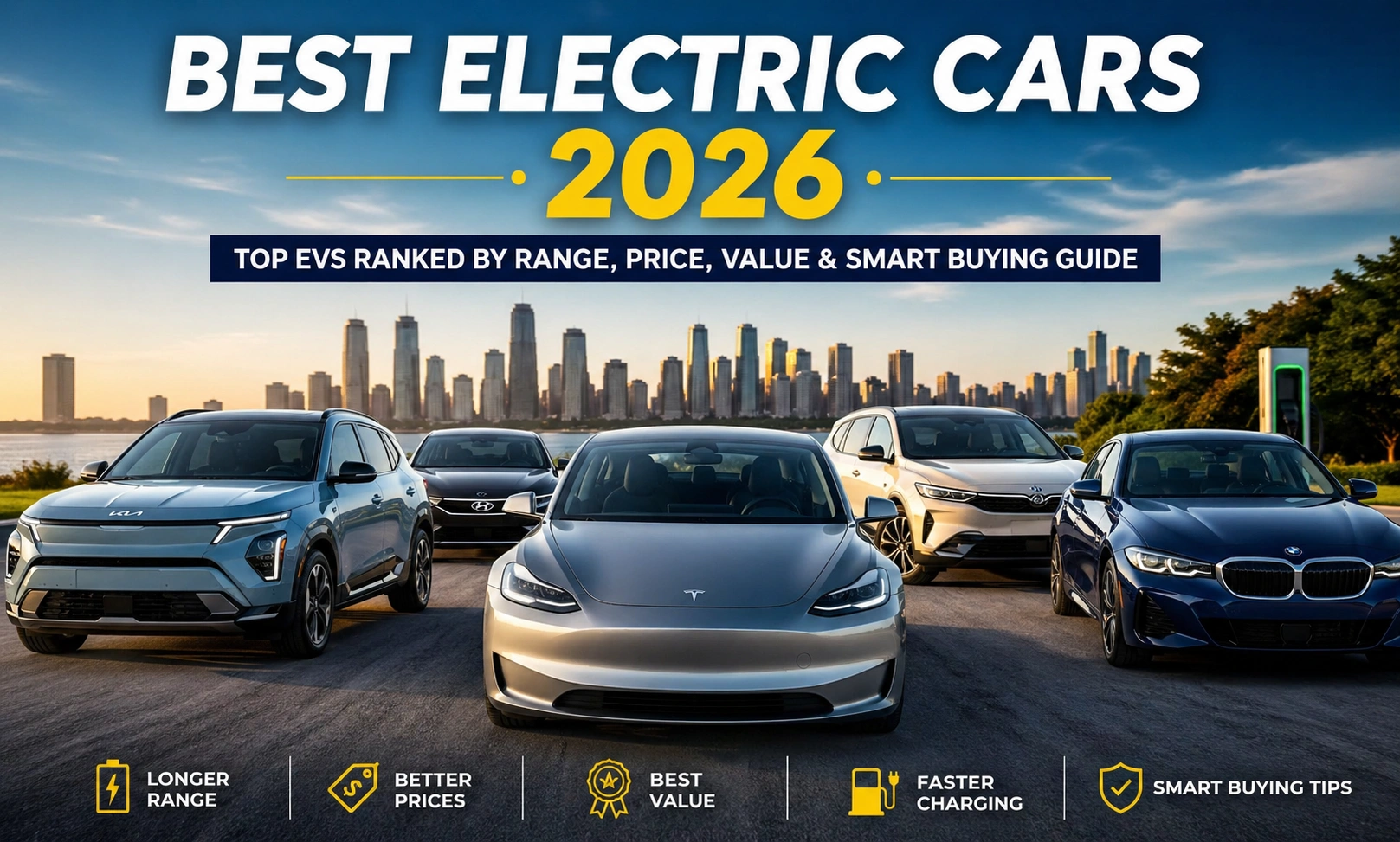
Electric cars are no longer the future. They are the present. In 2026, buyers have more choices than ever before. You can now find budget EVs, family SUVs, fast sports sedans, and luxury models with long range. Charging is easier too, and battery tech keeps improving each year. That means many drivers who once waited are now ready to switch.
If you are searching for the best electric cars 2026, this guide will help you save time and money. We will compare top models, prices, charging speeds, and real-life value. We will also look back at older EV years so you can see how far the market has come. Some 2020 or 2021 EVs are now smart used buys. Others are outdated. Knowing the difference matters.
I have followed the EV market for years, and one lesson stays true: the best EV is not always the most expensive one. It is the one that fits your life. Let’s find the right one for you.
The EV market feels stronger in 2026 than ever before. Prices are more competitive. Range anxiety is lower. Many new models can drive over 300 miles on one charge. Some premium cars go much farther. Fast charging also saves time, with many cars reaching 80% in around 20 to 30 minutes.
Car makers now build EVs for real needs. Families can choose three-row SUVs. City drivers can choose small, lower-cost hatchbacks. Luxury shoppers can enjoy silent cabins packed with smart tech. Even used EV buyers have strong options now.
Another big reason is running cost. Charging at home can cost less than fuel. EVs also need less maintenance because they have fewer moving parts. No oil changes. Fewer brake jobs. Less engine wear. Over time, that can add up to real savings. If you wanted to wait for a better time, 2026 may be the sweet spot.
| Model | Best For | Est. Range | Starting Price |
|---|---|---|---|
| Kia EV9 | Families | 220–320 mi | $56,000 |
| Hyundai Ioniq 6 | Best All-Rounder | 320–360 mi | $38,000 |
| Tesla Model 3 | Efficiency & Charging | 340–380 mi | $42,000 |
| Hyundai Ioniq 5 | SUV Buyers | 260–300 mi | $40,000 |
| BMW i4 | Sport Sedan | 270–310 mi | $55,000 |
| Nissan Leaf 2026 | Budget New EV | 210–260 mi | $30,000 |
| Cadillac Lyriq | Premium SUV | 290–320 mi | $60,000 |
The Kia EV9 stands out because it solves a real problem. Many families need three rows, cargo space, and comfort. Most EVs still focus on two-row layouts. The EV9 gives you space for kids, luggage, and road trips without feeling cramped.
It also charges quickly on fast chargers and offers useful range. That matters when traveling with family. Inside, the cabin feels modern and practical. The third row is actually usable, which is rare. Safety tech is strong too.
If you compare value, the EV9 often costs less than luxury rivals while offering similar usefulness. For many homes, this could replace a gas SUV without major compromise. If you need space first, this is one of the best electric cars 2026 to test drive.
The Hyundai Ioniq 6 is one of the smartest EVs on the road. It blends long range, smooth driving, and fair pricing. Its shape helps efficiency, which means more miles from each charge.
For commuters, this is a great pick. For small families, it works well too. The ride feels calm and quiet. Fast charging is another big win. On the right charger, stops can be short.
I often recommend this car to buyers who want balance. It may not be the flashiest EV, but it gets many things right. It is practical, modern, and easier to justify than many high-priced rivals. That balance is why it ranks high in the best electric cars 2026 list.
The Tesla Model 3 remains popular for simple reasons. It is efficient, quick, and backed by a strong charging ecosystem in many regions. For drivers who take long trips, reliable fast charging can matter more than extra horsepower.
The cabin is minimal, which some love and others dislike. Tech features are strong, and over-the-air updates keep the car fresh. Used Model 3 prices can also make ownership more appealing.
If charging access is your top concern, the Model 3 still deserves attention. It is not perfect, but it continues to be one of the easiest EVs to live with for many buyers. That keeps it near the top of the best electric cars 2026 rankings.
The Ioniq 5 mixes SUV practicality with hatchback ease. It offers solid space, comfortable seats, and quick charging. Many people like the styling too. It looks different without trying too hard.
This model works well for families who do not need a third row. It is easy to drive in town and steady on highways. Interior room feels larger than expected because of the flat floor design.
If you need one car for daily life, shopping, school runs, and weekend trips, this EV checks many boxes. It is one of the most complete non-luxury options available today.
Some buyers want fun as much as savings. That is where the BMW i4 shines. It feels more like a sporty sedan than a tech gadget. Steering, power delivery, and road feel are stronger than many rivals.
The cabin is premium and refined. You get comfort, strong screens, and quality materials. Range is also competitive enough for daily use and longer drives.
This is a smart pick for drivers moving from a sporty gas sedan. It offers a familiar premium feel while giving you EV benefits. If driving enjoyment matters, the i4 deserves a close look.
Not every buyer wants a $50,000 car. Thankfully, lower-cost EV choices are improving. The redesigned Nissan Leaf is expected to offer better range and newer tech at an accessible price. Used Chevrolet Bolt models also remain great value picks in many markets.
Here is a simple rule: if your daily drive is short, do not overpay for huge range. Many people drive less than 50 miles a day. A smaller battery can still cover that easily.
Buying smart matters more than buying big. A lower-priced EV with home charging may save more money than an expensive long-range model. Budget buyers should focus on total ownership cost, not just sticker price.
| Buyer Type | Best Pick |
|---|---|
| Family with kids | Kia EV9 |
| Daily commuter | Hyundai Ioniq 6 |
| Road trip driver | Tesla Model 3 |
| Luxury buyer | BMW i4 |
| Budget buyer | Nissan Leaf |
| SUV lover | Hyundai Ioniq 5 |
The jump from older EVs to 2026 models is huge. Many 2020 EVs had shorter range, slower charging, and older software. By 2022 and 2023, more models improved design and battery size. In 2024 and 2025, competition pushed prices lower.
That means searches like best electric cars 2025, best electric cars 2024, best electric cars 2023, best electric cars 2022, best electric cars 2021, and best electric cars 2020 still matter. Why? Because used EV shoppers can find deals in those years.
A 2023 model may offer great value today. A 2020 model might be cheaper but slower to charge. Buyers should compare battery health, warranty, and charging speed before choosing used stock. Sometimes a newer used EV is worth the extra money.
Charging scares many first-time buyers, but it gets easier fast. Most owners do most charging at home. You plug in overnight and wake up with a full battery. That can feel easier than visiting a gas station.
Public charging matters most for road trips or apartment living. Before buying, check chargers near your home and common routes. Also check charging speed. A car that charges fast can save real time.
My advice is simple: think about your weekly routine. If you can charge at home, EV life becomes much easier. If not, choose a model with strong public charging support nearby. The right charging plan can make or break ownership happiness.
| Factor | Why It Matters |
|---|---|
| Range | Helps with trips and fewer charging stops |
| Price | Fits your budget |
| Charging Speed | Saves time on road trips |
| Warranty | Protects battery and major parts |
| Space | Must fit family and cargo |
| Software | Impacts user experience |
| Resale Value | Helps long-term ownership |
In many cases, yes. Fuel savings can be large, especially if you charge at home. Maintenance is often lower too. There is no oil to change. Brake wear can be lower because regenerative braking helps slow the car.
Insurance can vary. Some EVs cost more to insure. Tire wear may also be higher on powerful models. That is why total cost matters more than one number.
Buyers should compare five-year costs, not just purchase price. A car that costs more today may save money later. But if you rarely drive, savings may be smaller. Your usage decides the real answer.
Many first-time EV buyers make the same mistakes. One is buying too much range they never use. Another is ignoring charging access. Some buyers also focus only on speed or flashy screens.
Do not forget practical things like trunk size, child seat space, winter range, and warranty support. Test drive the car. Sit in the back seats. Try the controls. A spec sheet cannot show comfort.
Also check software reputation. Some cars have great hardware but annoying apps or slow menus. Real owner reviews can help here. A smart EV choice balances numbers with everyday life. That is how you avoid regret.
| Option | Best For | Main Benefit |
|---|---|---|
| New EV | Latest tech buyers | Full warranty |
| Used EV | Budget shoppers | Lower price |
| Nearly New EV | Best value hunters | Lower cost + newer features |
Battery technology keeps moving fast. New batteries promise faster charging and longer life. Some brands are working toward charge times close to gas stop convenience. That could remove one of the last barriers for many buyers.
More affordable EVs are also coming. As production grows, lower-cost models should improve. Charging networks will likely expand too. Software will become smarter, with better route planning and battery management.
In short, EVs are not slowing down. But that does not mean you should always wait. If a current model fits your needs now, it may already be the right time to buy.
The Kia EV9 and Hyundai Ioniq 5 are strong family choices. The EV9 is best if you need three rows.
Range leaders vary by market and trim, but several premium EVs now exceed 350 miles, with some going higher.
Yes, especially models with fast charging and strong charging network access.
Used can save money. New gives you the latest tech and full warranty.
Most modern EV batteries are designed for many years and usually come with long warranties.
Only if current models do not meet your needs. Many great options already exist in 2026.
The best electric cars 2026 prove that EVs are now for everyone. Families can choose roomy SUVs. Commuters can choose efficient sedans. Budget buyers can find better value than ever. Luxury fans can enjoy speed and comfort without fuel stops.
If I had to pick overall value, I would start with the Hyundai Ioniq 6 or Ioniq 5. For families, the Kia EV9 is hard to ignore. For charging confidence, the Tesla Model 3 stays relevant.
The smartest move is simple: choose the EV that matches your real life. Compare your budget, driving habits, and charging options. Do that well, and your next car could be your best one yet.